
We recognize storytelling in music as one of the most powerful method ever created to communicate emotion, identity, and shared human experience. Long before written language, music carried stories across generations, cultures, and continents. Rhythm, melody, and lyrics worked together to preserve memory, transmit values, and give voice to the unspoken.
Today, storytelling remains the defining force that transforms songs from simple sound into unforgettable experiences.
Music that tells a story does more than entertain. It connects, persuades, and endures. A compelling narrative allows listeners to see themselves inside the song, turning passive listening into active emotional participation. This is why storytelling-driven music consistently outlives trends and technologies.
Why Storytelling Transcends Traditional Music Promotion
Traditionally, artists might promote a new song by simply releasing it on streaming platforms or posting it on social media. However, this conventional approach often fails to generate genuine audience interest beyond an artist’s core fan base. Instead, storytelling introduces a layer of mystery and anticipation by inviting listeners into the creative journey from emotional inspiration to studio insightsmaking the music more compelling and memorable.
In a saturated media environment, storytelling elevates music from a sequence of sounds to an immersive human experience that resonates well beyond the first listen.
Understanding Storytelling in Music: Beyond Lyrics
When we talk about storytelling in music, we refer not only to the words artists sing but also to the entire narrative universe surrounding a piece of music. Songs carry stories through:
- Lyrics that convey emotional truths and personal journeys
- Instrumentation that evokes mood, tension, and resolution
- Visuals and promotional content that contextualize the music
- Personal anecdotes that reveal an artist’s creative process or life experiences
This holistic storytelling framework draws audiences into the emotional world of the music and fosters deeper listener engagement.
The Core Elements of Narrative in Music
Great narrative music typically includes several core storytelling elements that make songs stand out and deeply connect with audiences:
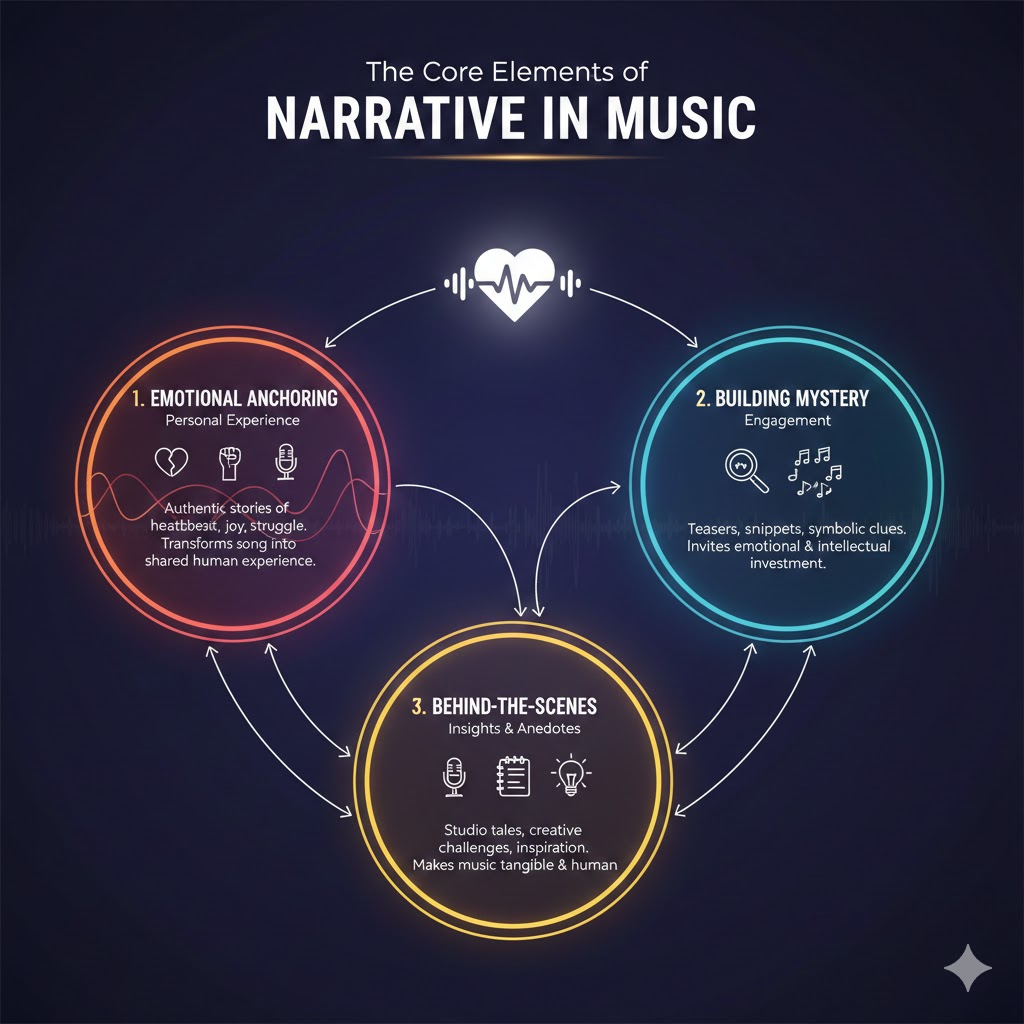
1. Emotional Anchoring Through Personal Experience
Listeners are drawn to music that feels authentic and vulnerable. When artists share personal experiences whether heartbreak, triumph, struggle, or joy their stories become relatable and emotionally impactful. This connection transforms a song from simple entertainment into shared human experience.
2. Building Mystery and Engagement
Rather than just announcing a release, artists can build excitement by sharing snippets of the creative process, themes, or symbolic clues that hint at a deeper narrative. This approach teases curiosity, encouraging listeners to invest emotionally and intellectually in the music.
3. Behind-the-Scenes Insights and Anecdotes
Fans are not only interested in the finished song, they crave stories about how it came to be. Whether it’s a tale from the recording studio, a creative challenge overcome, or a spontaneous moment of inspiration, these personal anecdotes make the music tangible and human.
How Storytelling Enhances Listener Relation and Engagement
True storytelling in music does more than tell a story; it invites the audience to participate in it. When listeners understand the motivations, emotions, or meaning behind a song, they form a deeper emotional connection that extends far beyond passive consumption.
This engagement fosters:
- Long-term loyalty
- Enhanced emotional impact
- Greater likelihood of sharing and advocacy
- Organic growth through narrative connection
By presenting multiple layers of content the song, the story, the visuals, the dialogue, artists create a holistic experience that resonates long after the music ends.
Storytelling’s Role in Music Marketing and Promotion
From digital campaigns to social media engagement, storytelling is an essential part of effective music marketing. It allows artists to:
- Share narrative content that drives fan interaction
- Use teasers and behind-the-scenes content to create anticipation
- Encourage fan participation through stories, questions, and shared experiences
- Build brand identity that transcends individual tracks
Storytelling becomes not just a creative element but a strategic tool in connecting with audiences and expanding reach in a meaningful way.
How Storytelling Builds Emotional and Cultural Impact
Music that tells a story often resonates on a profound emotional level, turning songs into powerful vessels for shared human experience. Examples throughout music history from soulful ballads that evoke nostalgia to socially conscious tracks that stir collective emotion demonstrate how storytelling can shape cultural identity and memory.
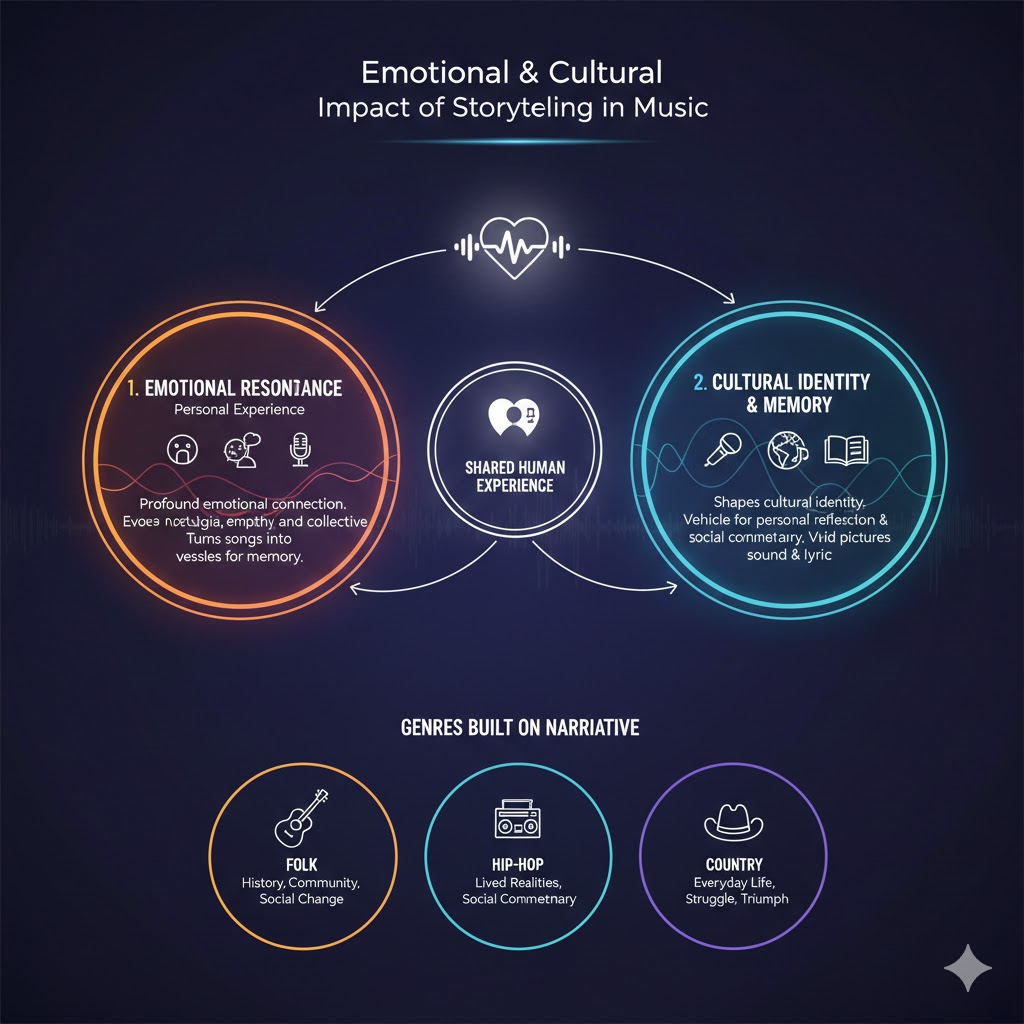
In genres like folk, hip hop, and country, storytelling is not just a stylistic choice but an intrinsic part of the musical tradition. Artists use narrative as a vehicle for personal reflection, social commentary, and cultural expression, painting vivid pictures through sound and lyric.
Storytelling in the Creative Process: From Concept to Release
Storytelling deeply influences the creative process itself. Songwriters, composers, and producers make intentional choices that serve the narrative from chord progression and melodic tension to sound design and lyrical detail. Every element contributes to a larger story arc, whether explicit or subtle.
By grounding creativity in narrative intention, artists ensure that each song communicates more than a melody it conveys meaning, emotion, and purpose.
Why Stories in Music Create Deeper Emotional Impact
We understand that the human brain is wired for stories. When music follows a narrative arc beginning, conflict, resolution it activates emotional centers more intensely than abstract sound alone. Story-based songs trigger empathy, memory recall, and emotional resonance, making them more memorable and impactful.
Stories in music:
- Anchor emotions to specific moments
- Create vivid mental imagery
- Encourage repeated listening
- Build personal and collective identity
When lyrics describe a journey, a loss, a triumph, or a transformation, the listener does not simply hear the song they experience it. This emotional depth is the foundation of musical longevity.
Narrative Structure in Songwriting
We see effective musical storytelling as a deliberate craft. Strong narrative songs often follow recognizable structures that mirror classic storytelling techniques.
1. Clear Perspective and Voice
Every powerful story begins with a defined point of view. First-person lyrics invite intimacy, while third-person storytelling allows observation and reflection. A consistent narrative voice builds trust and immersion.
2. Conflict and Tension
Stories thrive on tension. In music, this tension may appear as emotional struggle, unresolved desire, moral conflict, or external obstacles. Without tension, a song lacks momentum and emotional payoff.
3. Resolution and Meaning
A satisfying resolution does not always mean a happy ending. Meaningful storytelling provides closure, insight, or transformation. The listener leaves with understanding, reflection, or emotional release.
Genres Where Storytelling Dominates
We observe storytelling as a central pillar across many musical genres, each using narrative in distinct ways.
1. Folk and Acoustic Traditions
Folk music preserves history through personal and communal stories. These songs often document real events, social change, and cultural identity, relying on lyrical clarity and emotional honesty.
2. Country Music Narratives
Country music is renowned for vivid storytelling. Everyday struggles, love, heartbreak, faith, and resilience are conveyed through detailed scenes and relatable characters, making the genre universally accessible.
3. Blues as Emotional Storytelling
Blues music transforms personal pain into shared experience. Through repetition and metaphor, blues storytelling validates emotion and offers catharsis.
4. Hip-Hop and Spoken Word
Hip-hop elevates storytelling through rhythm and lyrical complexity. Personal journeys, social commentary, and lived realities are expressed with raw authenticity and narrative precision.
5. Concept Albums and Progressive Music
Concept albums expand storytelling across entire projects. Songs become chapters, themes recur, and narratives evolve, creating immersive musical worlds.
Storytelling and Listener Identity
We believe storytelling in music plays a crucial role in identity formation. Listeners often align themselves with songs that reflect their beliefs, experiences, or aspirations. A story-driven song becomes a mirror, validating emotions that may otherwise remain unspoken.
Music stories help listeners:
- Process personal experiences
- Feel understood and represented
- Navigate change and uncertainty
- Build emotional resilience
This deep identification transforms music into a lifelong companion rather than a temporary distraction.
The Role of Imagery and Symbolism
We recognize imagery as a defining element of musical storytelling. Vivid descriptions, symbolic language, and metaphor allow songs to communicate complex emotions without direct explanation.
Effective musical imagery:
- Paints scenes in the listener’s mind
- Uses familiar symbols to convey deeper meaning
- Leaves interpretive space for personal connection
A single line can evoke an entire story when imagery is precise and emotionally grounded.
Authenticity as the Foundation of Musical Stories
We emphasize authenticity as non-negotiable in storytelling-driven music. Listeners instinctively recognize truth in emotion, even when stories are fictionalized. Authenticity does not require autobiography; it requires emotional honesty.
Authentic storytelling:
- Avoids exaggeration for effect
- Respects the intelligence of the listener
- Reflects genuine emotional insight
Music rooted in authenticity builds trust, and trust builds long-term listener loyalty.
Storytelling in Instrumental Music
We acknowledge that storytelling extends beyond lyrics. Instrumental music tells stories through dynamics, tempo shifts, harmony, and melodic progression. Classical compositions, film scores, and ambient music guide listeners through emotional narratives without words.
Instrumental storytelling relies on:
- Musical tension and release
- Thematic development
- Emotional pacing
These techniques allow music to communicate universally, transcending language barriers.
Modern Technology and the Evolution of Musical Storytelling
We observe that technology has expanded storytelling possibilities without diminishing their importance. Digital production, AI-assisted composition, and global distribution enable artists to experiment with new narrative forms while maintaining emotional depth.
Modern storytelling in music benefits from:
- Multimedia integration
- Visual storytelling through video and performance
- Cross-cultural narrative exchange
Despite technological advances, the core principle remains unchanged: a meaningful story is what listeners remember.
Why Storytelling Music Outperforms Trend-Driven Content
We see a clear distinction between music designed for short term virality and music built on storytelling. Trend driven songs may achieve rapid exposure, but story-driven music sustains relevance.
Storytelling music:
- Encourages deeper listener engagement
- Generates word of mouth sharing
- Supports long term artistic identity
- Creates emotional loyalty
This enduring value explains why narrative songs continue to resonate long after trends fade.
Storytelling as a Timeless Competitive Advantage
We affirm that storytelling in music is not a stylistic choice, it is a strategic and artistic advantage. In an increasingly saturated musical landscape, stories differentiate, humanize, and elevate artistic work.
Artists who master storytelling:
- Build stronger emotional connections
- Create recognizable artistic voices
- Develop lasting cultural relevance
Music that tells a story does not compete for attention it earns it.
The Enduring Legacy of Musical Stories
We conclude that storytelling remains the heartbeat of meaningful music. Songs that tell stories capture moments, preserve emotions, and connect generations. They remind us who we are, where we have been, and what we hope to become.
As long as humans seek connection, understanding, and expression, the power of storytelling in music will remain unmatched.